
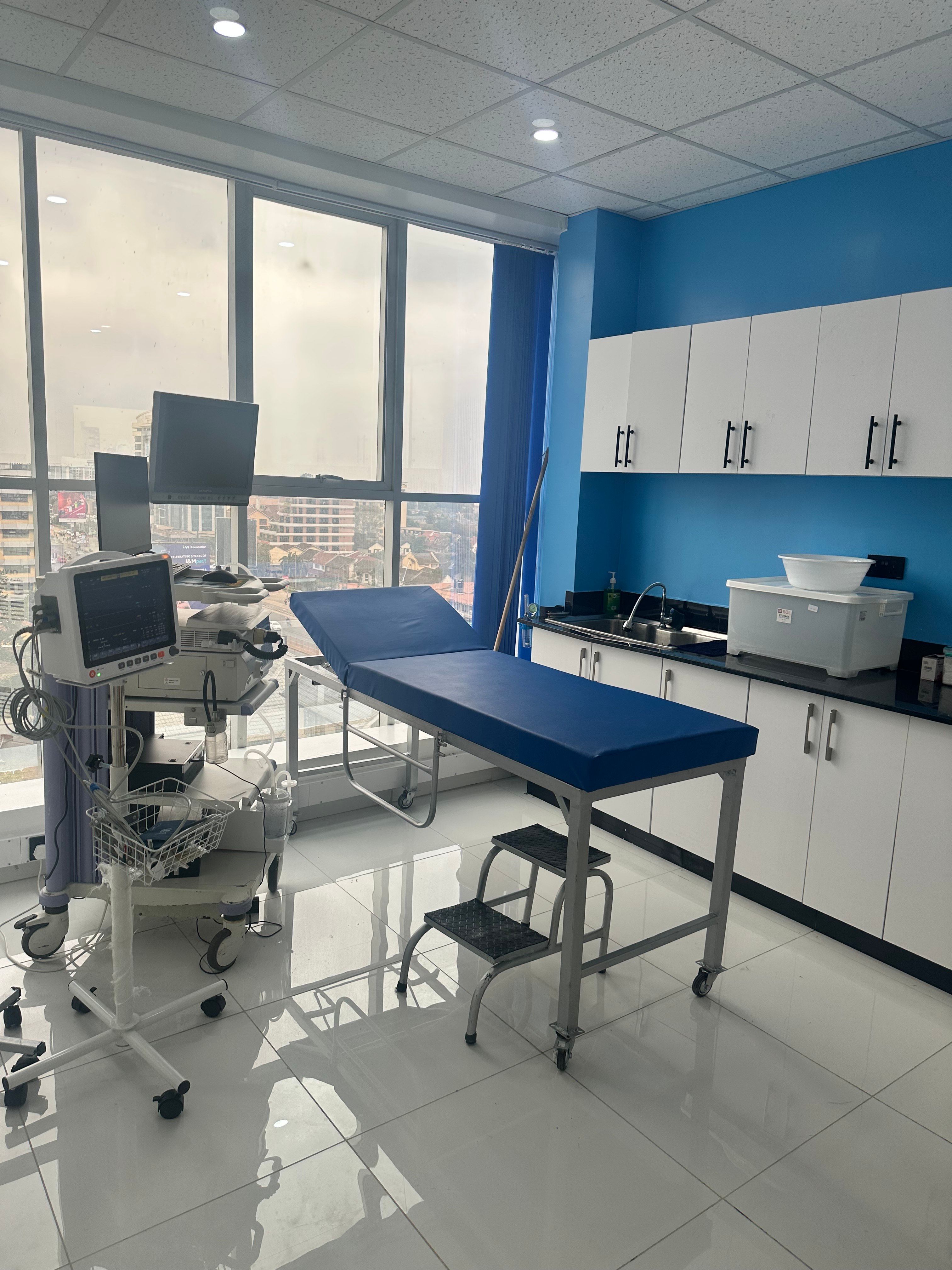
Our mission is to deliver clarity, comfort, and care at every stage of your journey. Having an endoscopy can be life-saving. By understanding what to expect, patients can approach their endoscopy with confidence and peace of mind.
What to Expect During Your First Endoscopy: A Complete Guide
If your doctor has recommended an endoscopy procedure, you may be wondering what to expect, how to prepare, and whether the test will be uncomfortable. The good news is that an upper endoscopy (sometimes called an EGD, or esophagogastroduodenoscopy) is a very safe and common procedure performed every day in hospitals and clinics. At Clarivida, we understand that going for an endoscopy can be overwhelming, especially if it’s your first one, that’s why we are determined to make the procedure safe, comfortable and stress free.
This guide explains the process step by step so you know exactly what happens before, during, and after your first endoscopy.
What Is an Endoscopy?
An endoscopy is a medical procedure that allows doctors to examine the digestive tract using a thin, flexible tube with a camera and light. Endoscopy is a painless minimally invasive procedure. Think of it as a small investigation of your digestive system. It is most often recommended for patients with symptoms such as:
- Persistent heartburn or acid reflux
- Difficulty swallowing (dysphagia)
- Ongoing stomach pain or discomfort
- Unexplained nausea, vomiting, or bleeding
During the procedure, the doctor can see inside the esophagus, stomach, and small intestine in real time. In some cases, small tissue samples (biopsies) may be taken for further testing.
Preparing for an Endoscopy
Preparing for a first endoscopy is usually simple:
- No food or drink for a few hours: Patients are generally asked not to eat or drink for 6–8 hours before the test. This keeps the stomach empty for a clear view.
- Medication guidance: Doctors may give specific instructions about adjusting certain medications, such as blood thinners.
- Bring a ride home: Because a sedative is usually given, patients should arrange for someone to drive them home afterward.
What Happens During the Endoscopy Procedure?
The endoscopy process is straightforward and usually takes less than 30 minutes:
- Check-in and preparation – The care team reviews medical history and explains the procedure.
- Sedation – A mild sedative is given through an IV to help patients relax and feel comfortable. Most people remain awake but drowsy, and many do not remember the procedure afterward.
- The procedure – The doctor gently guides the endoscope through the patient’s mouth and throat into the stomach. While some patients may feel slight pressure, it is not painful.
- Examination and biopsy – The camera sends detailed images to a monitor so the doctor can carefully check for inflammation, ulcers, or other conditions. If needed, a small biopsy may be taken.
- Completion – The scope is removed, and the patient is taken to a recovery area.
Recovery After an Endoscopy
After the procedure, patients rest while the sedation wears off. Some may experience:
- Mild drowsiness
- Temporary bloating or gas
- A slight sore throat
These effects usually go away within a few hours. Most patients can eat and drink the same day and return to normal activities by the following day.
Is an Endoscopy Painful?
A common question patients ask is: “Does an endoscopy hurt?”
The answer is no. With sedation, the procedure is not painful. Patients may feel some pressure or fullness but should not feel discomfort.
Why Is Clarivida your best choice for an endoscopy?
- Same day procedures with minimal disruption of your routine.
- Conscious sedation for maximum comfort
- Expert team of board-certified specialists.
- After care and follow up on your experience afterwards.
- Advanced technology for quality, and precise diagnosis and care.
Key Takeaway
A first endoscopy may seem intimidating, but it is a safe, quick, and highly effective procedure that gives doctors valuable insight into digestive health. By understanding what to expect, patients can approach their endoscopy with confidence and peace of mind.
Clinical Departments
Related procedures at Clarivida
Gastroenterology
Gastroscopy (OGD) & Upper Endoscopy
Direct examination of the oesophagus, stomach and duodenum
Gastroenterology
Colonoscopy
Examination of the entire large bowel for diagnosis, screening and polyp removal
Nephrology
Comprehensive Dialysis Center
Life-Sustaining Kidney Care
Bariatric Care
Non-Surgical Gastric Balloon
Minimally Invasive Weight Loss Solution