

Overview
About this procedure
A safe, reversible weight-loss procedure where a soft balloon is placed in the stomach to promote fullness and help patients eat less.
Our gastric balloon program offers a non-surgical, minimally invasive option for patients seeking effective weight loss. The balloon is inserted endoscopically and filled with saline, reducing hunger and supporting lifestyle changes. This FDA-approved device has helped thousands of patients worldwide achieve significant weight loss.
The gastric balloon works by occupying space in your stomach, creating a feeling of fullness and helping you eat smaller portions. Combined with our comprehensive nutrition and lifestyle counseling program, patients typically lose 10-15% of their total body weight during the 6-month treatment period.
What is included
- Non-surgical and fully reversible
- Quick 20-minute outpatient procedure
- No incisions or scars
- Temporary device (6 months optimal duration)
- Comprehensive dietitian support throughout
- Personalized weight management plans
Expected outcomes
- Average weight loss of 10-15kg over 6 months
- Improved blood sugar levels and reduced diabetes medication
- Decreased blood pressure and cholesterol levels
- Enhanced quality of life and physical mobility
- Development of sustainable healthy eating habits
- 90% patient satisfaction with the procedure and support
Anatomical Guide
Anatomical pathway & scope orientation
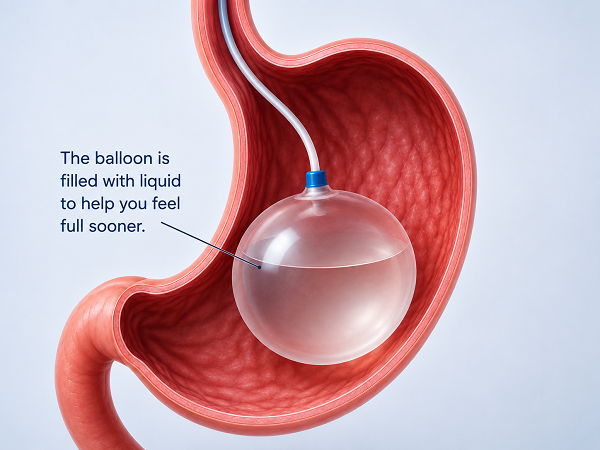
Anatomical Orientation
Stomach
Intragastric balloon placement: the soft silicone balloon is positioned endoscopically and filled with saline to promote early satiety.
- Region
- Stomach
- Examination Time
- 20–30 minutes for placement, 15-20 minutes for removal
Clinical Scope
Procedures we perform
Endoscopic Balloon Placement
Carried out in accordance with clinical safety protocols.
Balloon Inflation with Saline
Carried out in accordance with clinical safety protocols.
Nutritional Counseling Sessions
Carried out in accordance with clinical safety protocols.
Behavioral Therapy Support
Carried out in accordance with clinical safety protocols.
Exercise Program Guidance
Carried out in accordance with clinical safety protocols.
Monthly Progress Monitoring
Carried out in accordance with clinical safety protocols.
Balloon Removal after 6 Months
Carried out in accordance with clinical safety protocols.
Post-Removal Weight Maintenance Plan
Carried out in accordance with clinical safety protocols.
Key benefits of this procedure
- Average weight loss of 10-15% of total body weight
- Improved metabolic health and blood sugar control
- Reduced blood pressure and cardiovascular risk
- Enhanced mobility and reduced joint pain
- Supports long-term healthy lifestyle changes
- Boost in confidence and self-esteem
Patient Pathway
Step-by-step clinical sequence
Initial Evaluation
Comprehensive assessment including BMI calculation, medical history review and discussion of weight loss goals. We'll determine if you're a good candidate for the gastric balloon.
Pre-Procedure Preparation
Undergo baseline tests (blood work, EKG if needed). Attend nutrition counseling session to learn about post-placement diet. Receive detailed preparation instructions.
Balloon Placement Day
Fast for 8 hours before arrival. The procedure takes 20-30 minutes under mild sedation. The deflated balloon is inserted endoscopically and filled with saline solution.
Adjustment Period (First Week)
Experiencing nausea, cramping or discomfort is normal for 3-7 days as your body adjusts. Start with liquid diet, gradually advancing to soft foods. Anti-nausea medication provided.
Active Weight Loss Phase
Work closely with our dietitian and counselor. Attend monthly check-ups to monitor progress. Learn portion control, healthy eating habits and establish exercise routine.
Balloon Removal & Maintenance
After 6 months, the balloon is removed endoscopically (15-20 minute procedure). Transition to long-term weight maintenance plan with continued nutritional support.
Clinical Safety & Indications
Indications, risks and aftercare
When this procedure is recommended
- Obesity (BMI 27-40)
- Failed Previous Weight Loss Attempts
- Pre-Bariatric Surgery Preparation
- Metabolic Syndrome
- Type 2 Diabetes Related to Obesity
- High Cardiovascular Risk due to Weight
- Joint Problems from Excess Weight
When it may be deferred or unsuitable
- Previous gastric or esophageal surgery
- Large hiatal hernia or severe gastroesophageal reflux
- Inflammatory bowel disease or Crohn's disease
- Bleeding disorders or on anticoagulation therapy
- Pregnancy or planning pregnancy within 12 months
- Active peptic ulcer disease
- Psychological conditions preventing adherence to program
Discharge and aftercare instructions
- Attend all scheduled follow-up appointments (weeks 1, 2, 4, 8, 12, 16, 20, 24)
- Take prescribed anti-nausea and acid-reducing medications as directed
- Follow progressive diet plan provided by dietitian
- Stay well hydrated - drink water between meals, not during
- Report blue-tinged urine, severe abdominal pain or persistent vomiting immediately
- Engage in regular physical activity as recommended
- Attend behavioral counseling sessions for long-term success
- Plan for balloon removal at 6 months and transition to maintenance phase
Infection control & monitoring standards
- Pre-procedure gastroscopy to ensure stomach suitability
- Continuous monitoring during placement and removal
- Anti-nausea medication protocol for initial adjustment
- Ongoing assistance for any concerns
- Regular follow-up visits to monitor balloon position and patient wellbeing
This guide provides general patient information and does not replace an individual medical consultation. Your attending doctor will explain the specific preparation, risks and alternatives relevant to your medical history.
Common Questions
Frequently asked questions
How much weight can I expect to lose?
Most patients lose 10-15% of their total body weight over the 6-month period. For example, if you weigh 100kg, you can expect to lose 10-15kg. Results vary based on commitment to diet and lifestyle changes.
Will the balloon be uncomfortable?
The first 3-7 days involve adjustment period with nausea and cramping. After this, most patients forget the balloon is there. We provide anti-nausea medication to help with the transition.
What can I eat with the balloon?
You'll follow a progressive diet: liquids for first few days, then pureed foods, soft foods and finally regular healthy foods in smaller portions. Our dietitian guides you through each phase.
Can the balloon pop or deflate?
Very rarely. The balloon is made of durable medical-grade silicone. If deflation occurs, the balloon turns blue (blue dye in the saline), visible in urine and you should contact us immediately.
Will I keep the weight off after removal?
Success depends on maintaining healthy habits learned during treatment. Our comprehensive program teaches sustainable lifestyle changes. Most patients maintain significant weight loss with continued adherence.
Is the gastric balloon safe?
Yes, it's FDA-approved with millions of procedures performed worldwide. Serious complications are rare (<1%). Common temporary side effects include nausea and stomach discomfort initially.
Related Services
Other clinical services at Clarivida
Gastroenterology
Gastroscopy (OGD) & Upper Endoscopy
Direct examination of the oesophagus, stomach and duodenum
Gastroenterology
Colonoscopy
Examination of the entire large bowel for diagnosis, screening and polyp removal
Nephrology
Comprehensive Dialysis Center
Life-Sustaining Kidney Care
General Medicine
General Medical Consultation
Comprehensive Primary Care & Health Checkups